Is There Another Planet Like Earth? Possible Habitable Exoplanets That Were Discovered
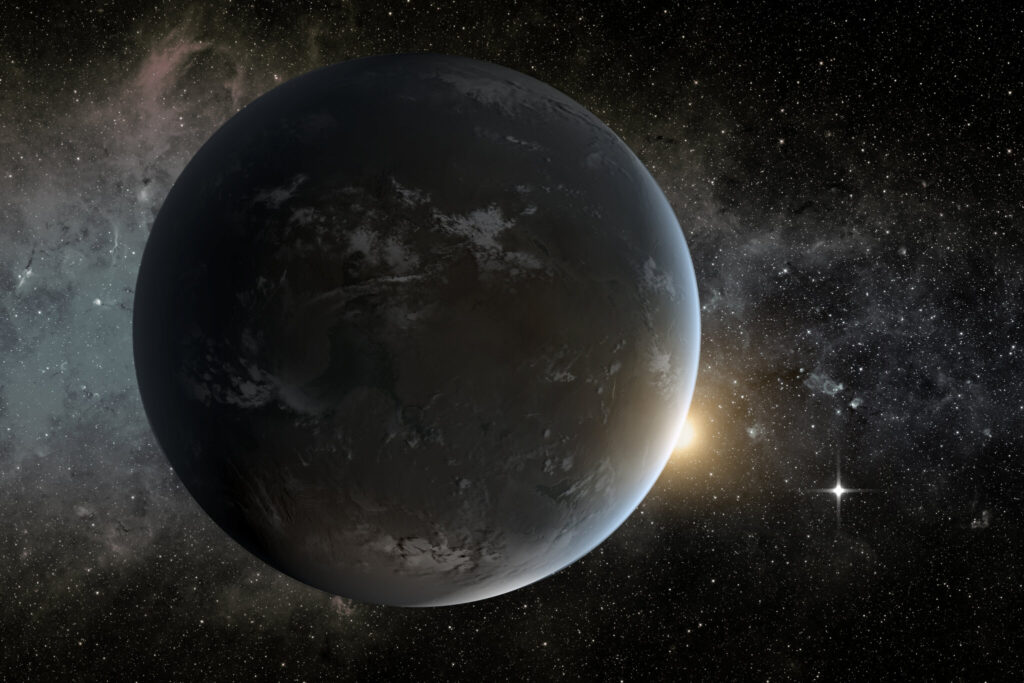
Astronomers, astrophysicists, cosmologists, and other scientists who study space are hard at work all the time. One thing that many of them are doing is trying to find other habitable planets that are like Earth. Scientists have to search far into the universe to find these exoplanets. Luckily, we now have the technology to search for these certain exoplanets. What are exoplanets? Exoplanets are other planets that orbit a star that are not in our solar system. So, scientists have to look in other solar systems to find planets that are in the Goldilocks Zone around a star. A Goldilocks Zone is the area in a solar system that is perfect for supporting life on Earth. It is far away enough from the star that it orbits, but not too far that it is too cold. Earth is in the Goldilocks Zone in our solar system. That’s why it is able to support all the life here.
Why would we need to search for habitable exoplanets? Well, we may need to evacuate Earth one day in the very, very distant future. Think about it, global warming is getting worse. Along with the Earth getting warmer, the air quality is getting worse, things are happening to the atmosphere, animals are dying, etc. When we have the technology to travel many light years in space, humans and life on Earth might have to go to another planet and start life there. Somewhere where it’s easy to grow crops, raise animals and other humans, breathe, and live like we do now.
Down below is a list of exoplanets that scientists found to possibly be habitable. These aren’t all of the possible ones found, but just the ones that sound the best in this time.
The Exoplanets:
- Kepler-62f- Kepler-62f is one of the many exoplanets found that orbit one of the Kepler stars (Kepler stars meaning any star that has the name Kepler in it and has planets orbiting it). Kepler-62f orbits the star Kepler-62 (hence the name Kepler-62f). Its mass can be described as about 35 Earths. Kepler-62f takes about 267.3 Earth days to fully orbit Kepler-62. It is about 0.718 AU (astronomical units, one AU is about the distance from Earth to the Sun) away from its star. Kepler-62f is about 1,200 light years away from Earth. It is also believed to be a rocky planet, like Earth, and may have oceans and water. We obviously can’t reach it now, but hopefully we can in the future.
- Kepler-442b- Kepler-442b orbits the star Kepler-442. It is a possibly rocky planet. Kepler-442b is about 2.36 Earths. This exoplanet fully orbits Kepler-442 every 112.3 Earth days. It gets a good amount of radiation from Kepler-442 and might be able to support life very well. It is 1,194 light years from Earth and 0.409 astronomical units from the star that it orbits.
- Kepler-452b- This exoplanet orbits the star Kepler-452. The star is about 10% larger than our Sun, but it is very similar to it. Kepler-452b is about 60% larger than Earth is and potentially rocky. It takes 384.8 Earth days to fully orbit Kepler-462. This exoplanet is 1,799 light years away from Earth.
- Kepler-1649c- This exoplanet is very similar to Earth not just in size, but in temperature, too. It is about 300 light years from Earth (so close compared to the other exoplanets!). Kepler-1649c gets about 75% of the starlight that Earth gets from our Sun. However, the red dwarf star that it orbits, Kepler-1649, may have stellar flare-ups. Kepler-1649c is also very close to its star. It takes about 19.5 Earth days to fully orbit the star. This exoplanet has given a lot of scientists hope.
- TOI-700e- TOI-700e was just recently discovered in 2023. It orbits the star, TOI-700. This exoplanet is 102 light years away from Earth and 0.134 AU from the start that it orbits. Because it is so close to its star (TOI-700), one year on this possibly habitable exoplanet is 27.8 Earth days. Even thought it is very close to a star, the star TOI-700 is only about 40% as large as the Sun, so it is smaller and doesn’t give off as much light as the Sun. It is very similar to Earth in size, being about 95% the size of Earth.
- TOI-700d- This exoplanet is in the same system as TOI-700e, so it is very similar. This exoplanet is bigger than Earth and takes longer to fully orbit TOI-700 (about 37.4 Earth days). TOI-700d is the same distance away from Earth as TOI-700e- 102 light years away. It is 0.1633 AU away from TOI-700.
There are many exoplanets that scientists have discovered that are potentially habitable and are like Earth. There are some that are almost the exact same size as Earth, some that are smaller, and some that are larger. Even though there are many exoplanets listed before, there are still many more that were found, and many more that are going to be found. See the links down below to learn more information about each exoplanet and to learn about more potentially habitable exoplanets.
Credits and Further Reading:
- https://www.space.com/30172-six-most-earth-like-alien-planets.html
- https://exoplanets.nasa.gov/exoplanet-catalog/375/kepler-62-f/#:~:text=Kepler%2D62%20f%20is%20a,0.718%20AU%20from%20its%20star.
- https://www.nasa.gov/content/kepler-62-and-the-solar-system
- https://www.space.com/24142-kepler-62f.html
- https://exoplanets.nasa.gov/exoplanet-catalog/4906/kepler-442-b/
- https://exoplanets.nasa.gov/exoplanet-catalog/5471/kepler-452-b/
- https://exoplanets.nasa.gov/news/1637/earth-size-habitable-zone-planet-found-hidden-in-early-nasa-kepler-data/
- https://www.azoquantum.com/Article.aspx?ArticleID=407
- https://theconversation.com/distant-star-toi-700-has-two-potentially-habitable-planets-orbiting-it-making-it-an-excellent-candidate-in-the-search-for-life-198274
- https://exoplanets.nasa.gov/exoplanet-catalog/8729/toi-700-e/
- https://exoplanets.nasa.gov/exoplanet-catalog/7658/toi-700-d/
- https://www.nytimes.com/2022/04/02/science/nasa-exoplanets-5000.html (for image).