How Will the Universe End? Here Are Brief Descriptions of the Four Theories of How Scientists Think the Universe Would Cease to Exist
There are many theories of how scientists think the universe would end- and not just how life would end. However, we don’t necessarily have to worry about this for now (nobody knows for sure, but we have more than a few billion years).
There are four main theories that scientists who study space (like astronomers, astrophysicists, cosmologists, etc.), have come up with to predict how the universe would end. They’re just theories, of course, but these four are the most realistic ways the universe and life in our universe could end. The four ways are named Heat Death (or Big Freeze), the Big Rip, the Big Crunch, and vacuum decay. These names basically describe themselves. Before we talk about each of them, we have to discuss more about space and the universe itself. Keep reading to learn about basic vocabulary you may see later on.
Important Terms
Gravity- the force the holds everything in the universe together. It’s what keeps us on the ground. When we jump, we always land back on the ground or another surface because of gravity. Objects in space have a gravitational pull. The star in the middle of our solar system which we call the Sun has a large gravitational pull, so the objects in our solar system are kept in their place by gravity and inertia.
Inertia- the force that keeps things in one place. If we didn’t have inertia, the planets would most likely crash into the Sun or stop orbiting the Sun and go off into outer space.
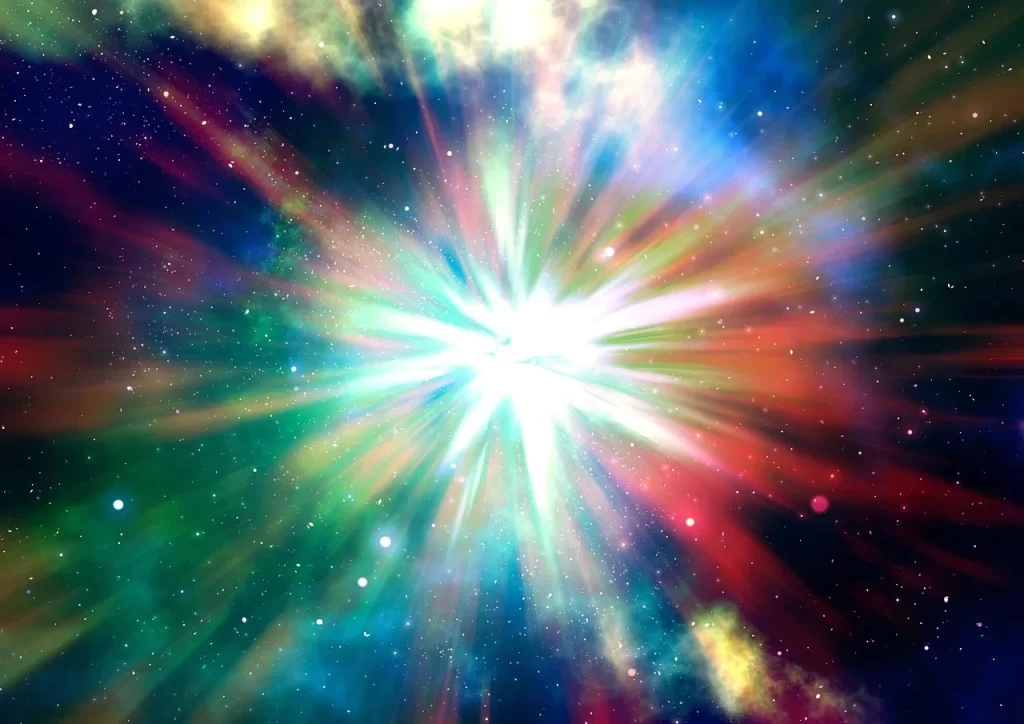
The Big Bang theory- the theory of how scientists who study space think the universe started. It exploded as a result of high density and high temperatures.
Density- how dense something is (kind of straight forward, but true). For example, water is denser than wood, which is why wood floats on water.
Matter- matter is something that takes up space, most things are matter. There are different stages of matter.
Dark Matter- matter found in the universe that we cannot see. The way we can tell where dark matter is in the universe is that sometimes, scientists will see a dark space with nothing behind it or in front of it. For example, if astronomers are studying stars in the universe and all of a sudden they see a dark space in between a star cluster, it’s most likely dark matter.
Vacuum- no, this is not the object that cleans up dust from the floor, but the bareness of space. Space is a vacuum. There isn’t really anything in between all of the matter. There is no air for us to breathe. If we tried to hold our breath in space, we would explode. That’s why if you ever found yourself out in space without protection and want to live a few extra seconds, breath out slowly so all the air leaves your lungs, then you would die.
The Theories
Heat Death/The Big Freeze: The Heat Death is one of the four theories of how the universe would end. As the universe keeps expanding, it will become too cold. Too cold to support life, and everything will freeze. Eventually, there will be nothing left.
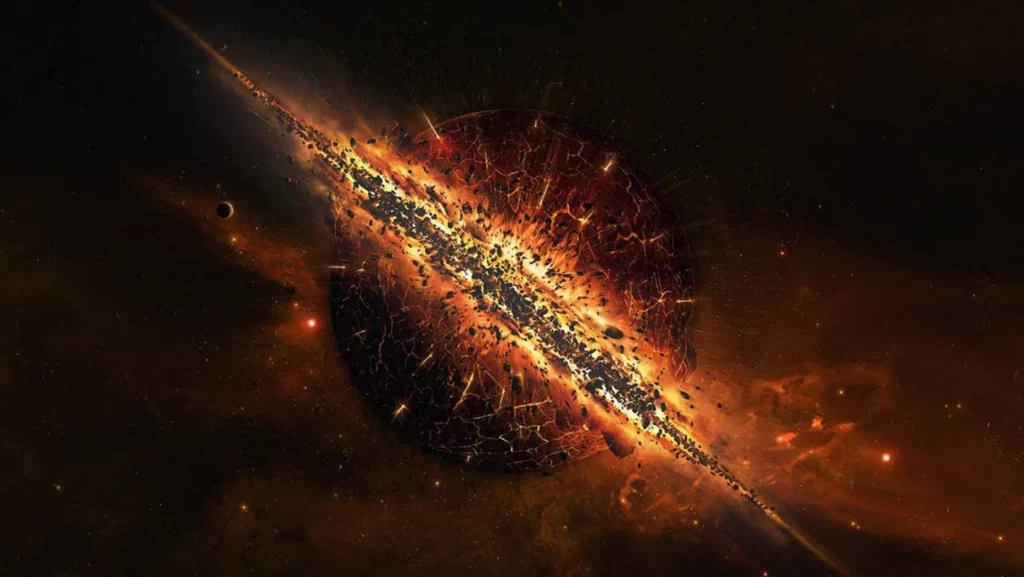
The Big Rip: This is very straight forward. The universe could possibly rip apart. The forces that hold all the objects in space together, like gravity and inertia, are going to eventually stop working. This is because these forces are going to be conquered by dark matter (see Important Terms). Everything, including atoms, will be ripped apart and destroyed.
The Big Crunch: This theory is about how the expansion of the universe will eventually stop. It seems impossible, however we are talking about the end of the universe, which seems impossible, but is inevitable. Everything will eventually be pulled back in to each other, like the expansion is reversing itself. Since all of this matter is being pushed together, it will become an enormous black hole and everything in the universe will cease to exist.
Vacuum Decay: Basically, all of the forces in the universe and the atoms, molecules, etc. will stop working. How would this happen? Well, a bubble will pop up somewhere in the universe. This bubble would contain physics that don’t work the same way as they do in the universe outside of the bubble. The bubble would start expanding at the speed of light, and everything in the universe would stop working.
Conclusion
Now you have some brief information about the four main theories of how the universe would end. But don’t worry, these won’t happen for a very long time. We have a few (or a lot more than a few) billion years until one of these happens. Or who knows, they might not even happen. To learn more about each of these theories of how the universe would end, click on the links down below for further reading.